

Estonia: one of the least religious countries in the world
- Isaure VL

- Jun 12, 2019
- 2 min read
With only 14% of its inhabitants declaring religion as an important part of their life, Estonia is one of the least religious countries in the world. Although religious buildings are omnipresent in Estonia, particularly in the capital Tallinn, religion does not play a role in the country's political and economic life. Estonia's secularism is directly linked to its painful history and we will try in this article to explain the country's current religious distribution.

When you walk on the cobblestones of Tallinn's old town, we can notice the large number of churches and the architectural diversity of the buildings. Over the last nine centuries, old Tallinn has seen the emergence of dozens of religious monuments that now delight walkers but remain empty on Sundays. Indeed, more than half of the Estonian population (55%) say that they have no religion, which makes the country one of the most agnostic in the world.
The religious distribution is as follows:
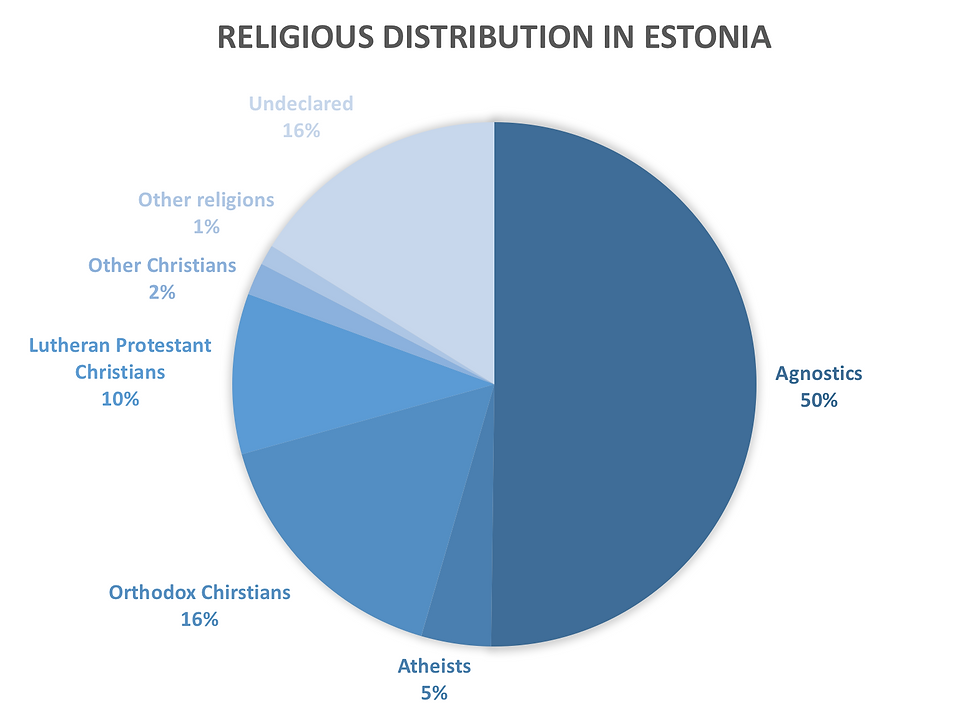
This particular distribution has its origin in a complex and painful religious history correlated with the country's political history. Indeed, the many invaders of the territory over the past nine centuries have imposed their religions and beliefs to the inhabitants, often through violence.

Although some traces of the introduction of orthodoxy by missionaries from Novgorod have been found, before the 13th century the inhabitants of the Estonian territory were mainly pagan people. It was in 1202 that the Pope decided on the late Christianization of the country. The Baltic Crusades then allowed Western Christians to take control of present-day Estonia. Later, Lutheranism gradually settled under Swedish occupation in the 16th and 17th centuries.
In 1925, Church and State were separated, but religious instruction was still provided in schools. It is estimated that before the World War II, about 80% of the Estonian population was Protestant. However, from 1939 under Soviet occupation, anti-religion legislation was put in place as part of the Union's state atheism policy. Thus, Church property was confiscated and many Christians were deported to Siberia. Throughout the Second World War, many churches were also destroyed. This anti-religion legislation was repealed after the dissolution of the Soviet Union in 1991.

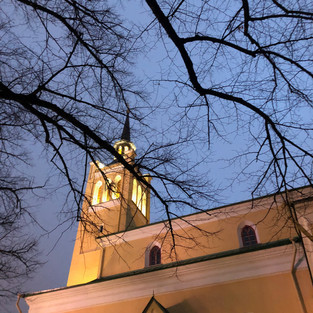


Given the importance of religious buildings in Estonian heritage, we can ask ourselves about relations the Church and the State have today.
Nowadays, there is no law governing relations between the various Churches and the State, which are governed by specific agreements. The Constitution adopted in 1992 provides for religious freedom, equal rights and the absence of a State Church. Regarding the place of religion in education, since 2001 religious instruction has no longer been compulsory in public schools but is permitted. Finally, state financial assistance is provided to religious organizations: maintenance of buildings with historical value, exemption from taxes, duties, etc.
The religious history of Estonia is complex, and in this article I have tried to mention the main points of its history in order to highlight some keys to understand its unique religious distribution. The country has managed to find a certain balance so that religion, the source of past pain, can be considered, respected and freely practiced throughout the country without influencing Estonian economic and political life.



Comments